-
Kenmare, County Kerry: June 2022
Su and himself sailed from Holyhead, North Wales on the morning of Thursday 1 June 2022. We arrived in Dublin and scooted down to Kenmare in about 6 hours (!) getting stuck behind every tractor in the South West of Ireland. We were greeted, in Kenmare, by the indomitable Mary O’Brien and soon sorted out the accommodation at Hawthorn House plus food and drink. Kenmare is a small, pretty, town situated on the Ring of Kerry – a mecca which draws the tourists to see the scenic wonders of Sneem, Derryvane, Waterville, Valentia Island, Cahirsiveen and Killarney.

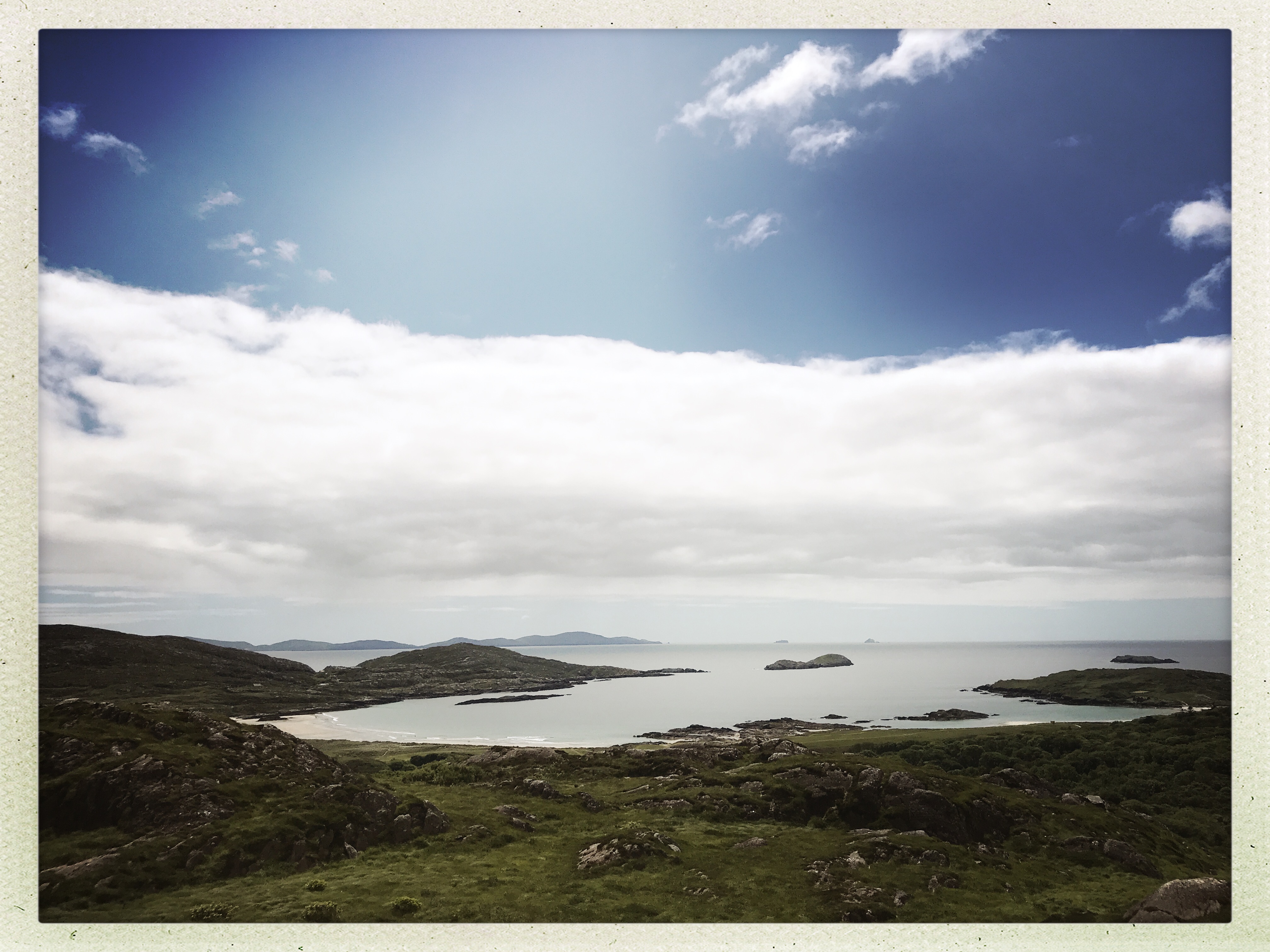
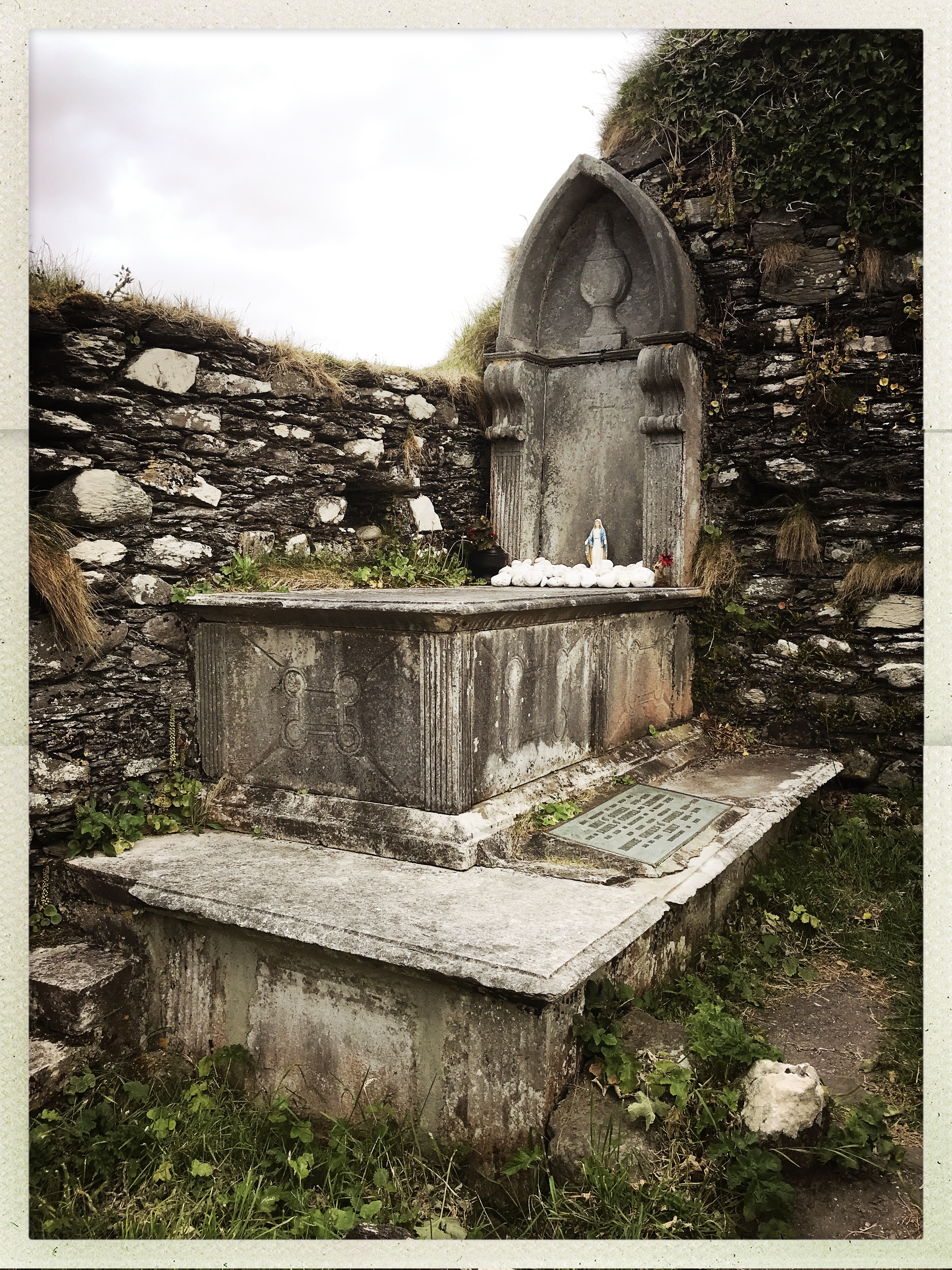
On the Friday we set out on the Ring (going anti-clockwise to avoid the tourist coaches) with the intention of visiting Su’s great aunt’s houses in Waterville and Cahirsiveen. I was also keen to visit Derrynane – the home of Daniel O’Connell with a beautiful strand to explore. We also visited the grave of Mary O’Connell which is located in the ruins of the old Abbey.


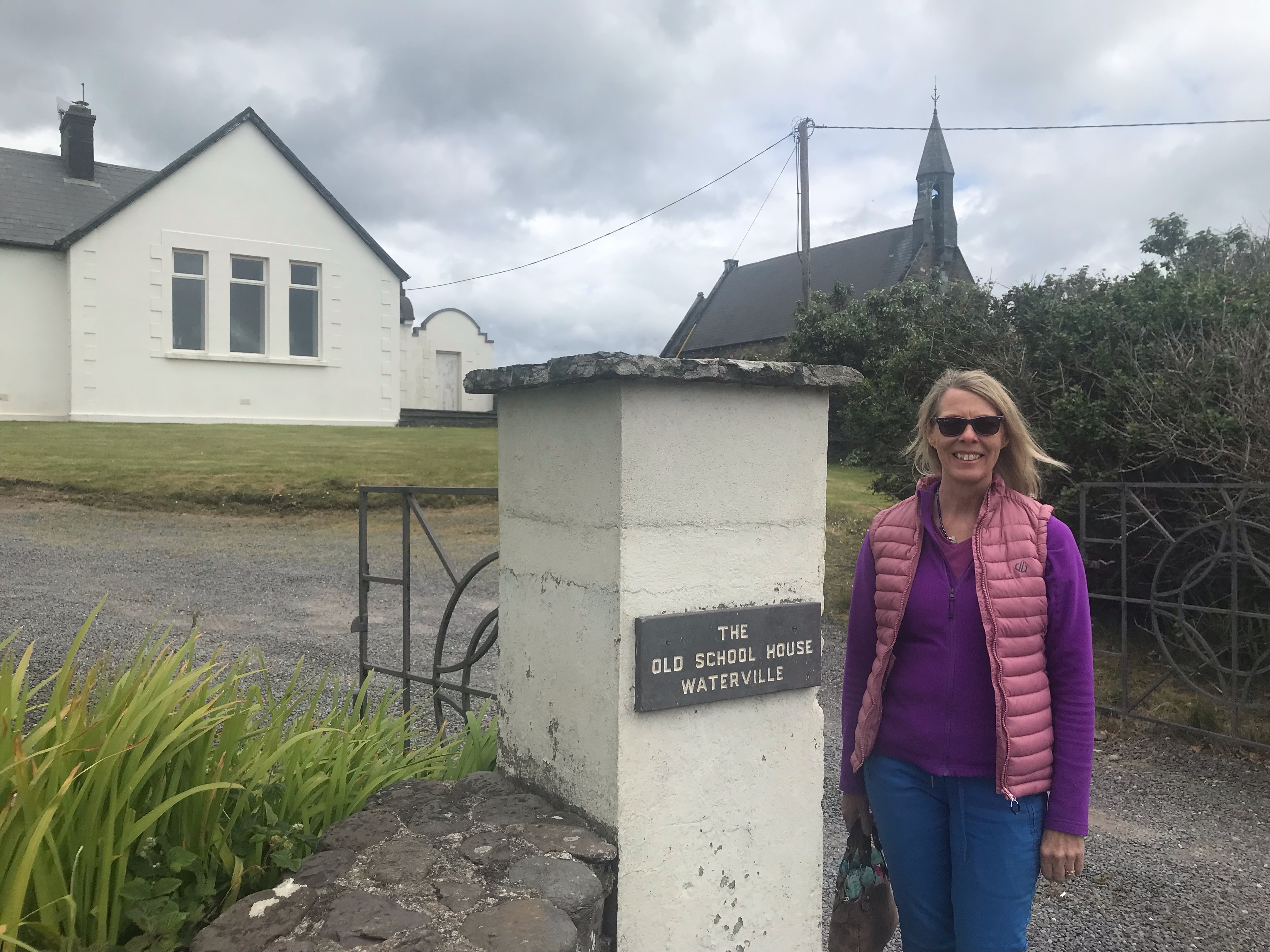
In Waterville we located the house of Su’s Aunt, Sarah Quigley, born in Enniskerry, County Wicklow had trained as a teacher and taught in the local national school. Her husband, Arthur Cullum, worked for the Meteorological Office and the cable station. The cable, from Waterville, stretched some 2,400 miles across the Atlantic and linked Canada with the UK and France. The school is linked to St Michael’s Church of Ireland (which you can see in background below).
,
We then had a short diversion to visit Portmagee, Valentia Island and the Kerry cliffs – with great views of Skellig Michael/Sceilig Mhichíl – an old monastic settlement founded between 600-800AD.


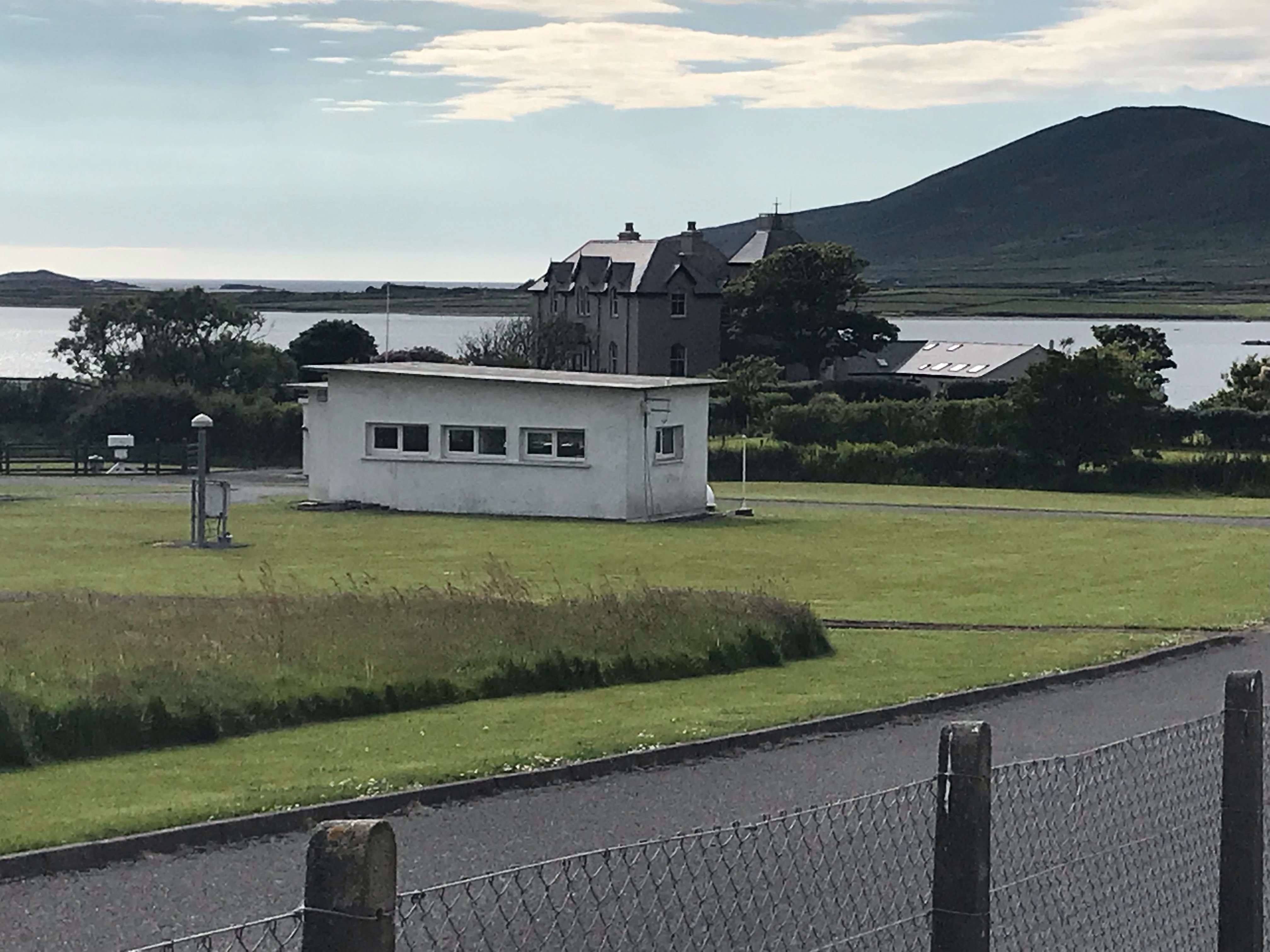
We arrived in Cahirsiveen late afternoon and soon found the other Cullum home – Westwood House, situated just outside the town. Arthur Cullum’s father – John Edward – came to Ireland from Surrey, England in the 1870s and was the chief scientist for the Valentia Meteorological Office. Su’s Great Aunt Sarah lived in Westwood House when she first came to Kerry from Wicklow.
We got back to Kenmare for a delicious meal at Mulcahy’s restaurant. Su said – as we are in Kerry – let’s go for a walk. I talked to the bar staff and – after a couple of pints of plain – was convinced by them to climb Carrauntoohil – the highest mountain in Ireland. They forgot to mention someone died on it this week and two climbers were helicoptered off yesterday. “Sure – you’ll be grand” – they said.

So we’re back – after 3,500 feet of ascent, hanging off rocks in the Devil’s Ladder, 8 pints of water and 6 hours of walking through driving wind and rain. And we’ve been ill for the past month, not particularly fit after the Covid shenanigans- and have a dodgy assortment of knees, feet and hips. If you ever visit Kerry don’t trust the bar staff…

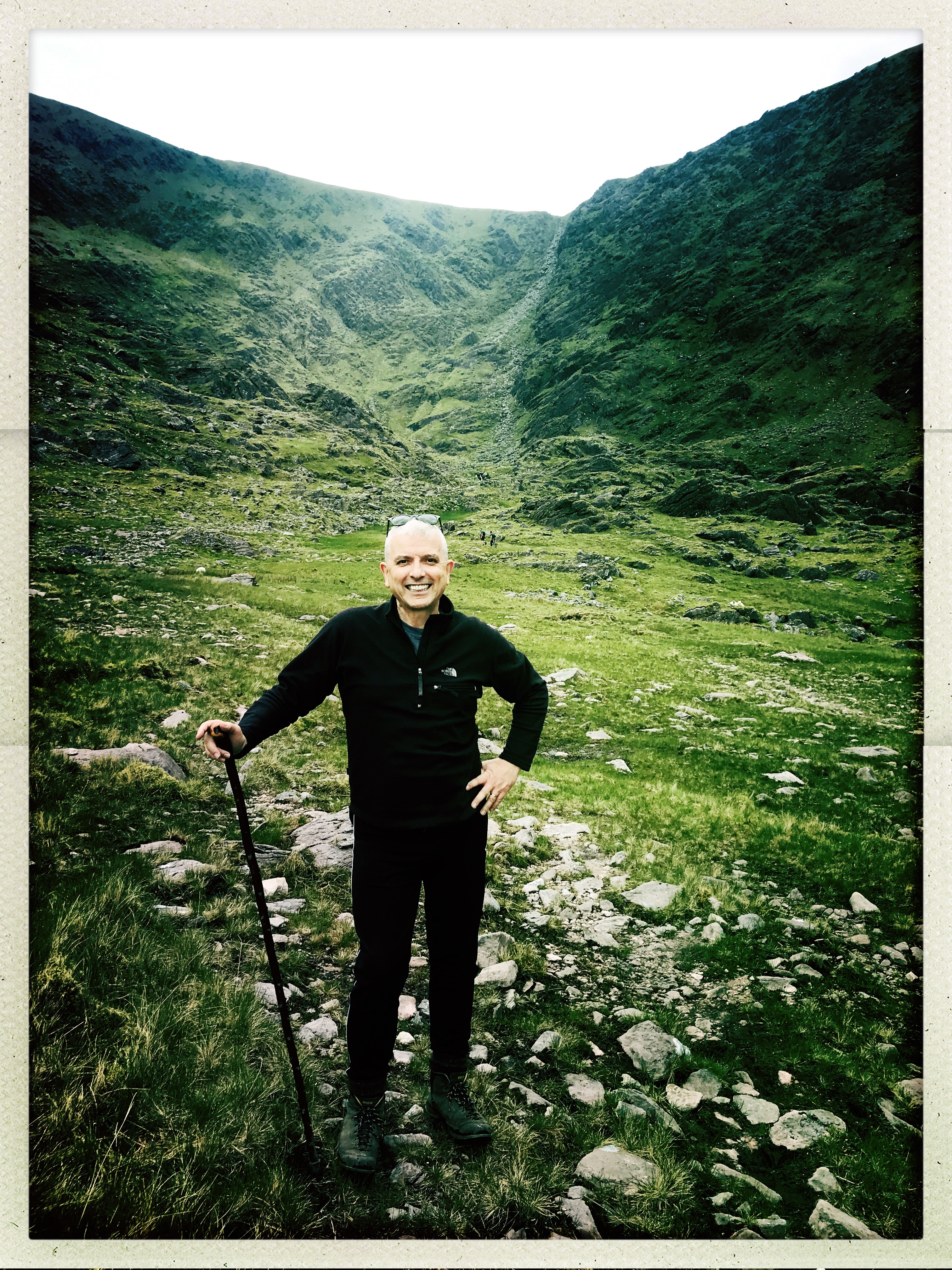

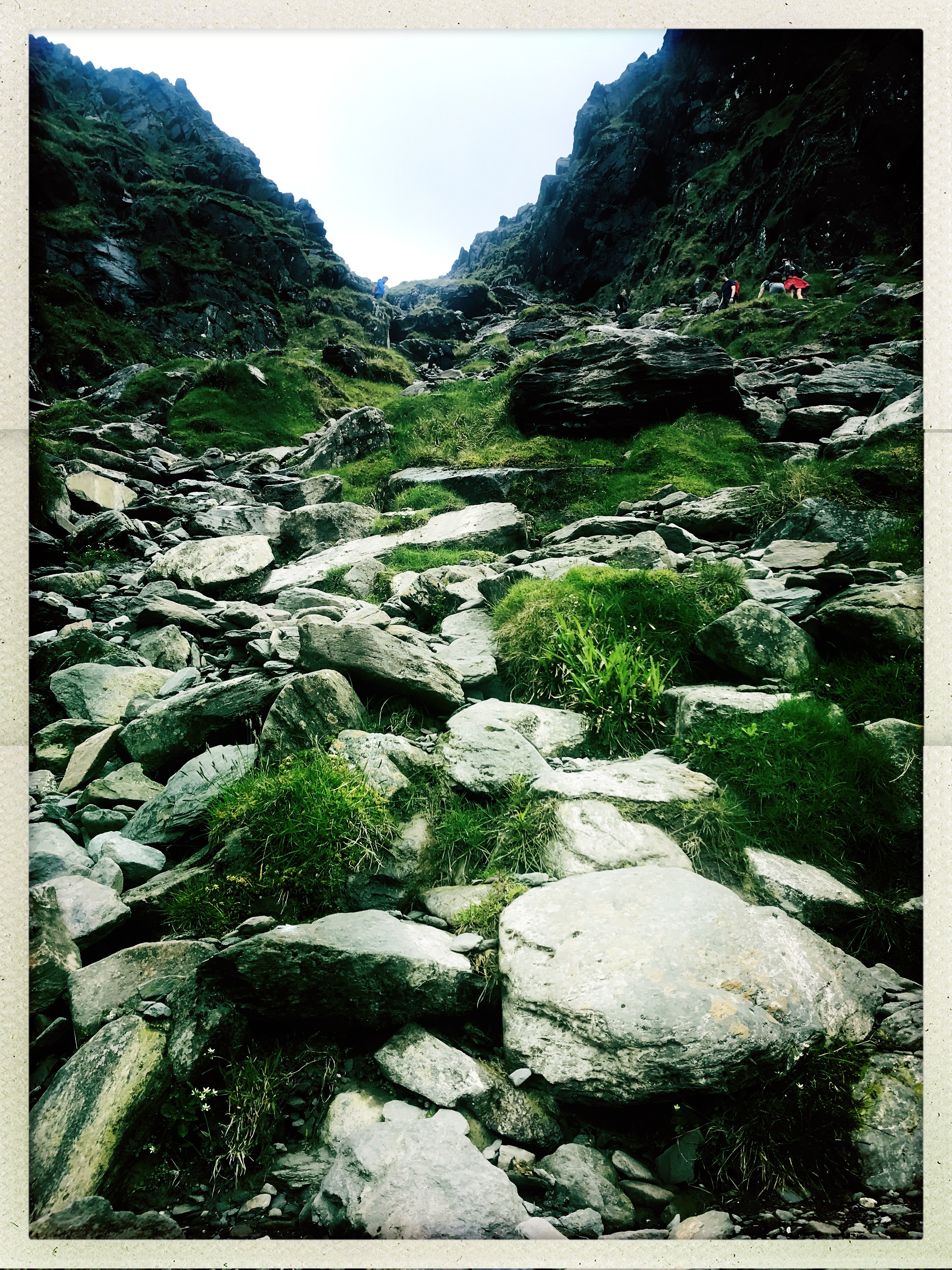

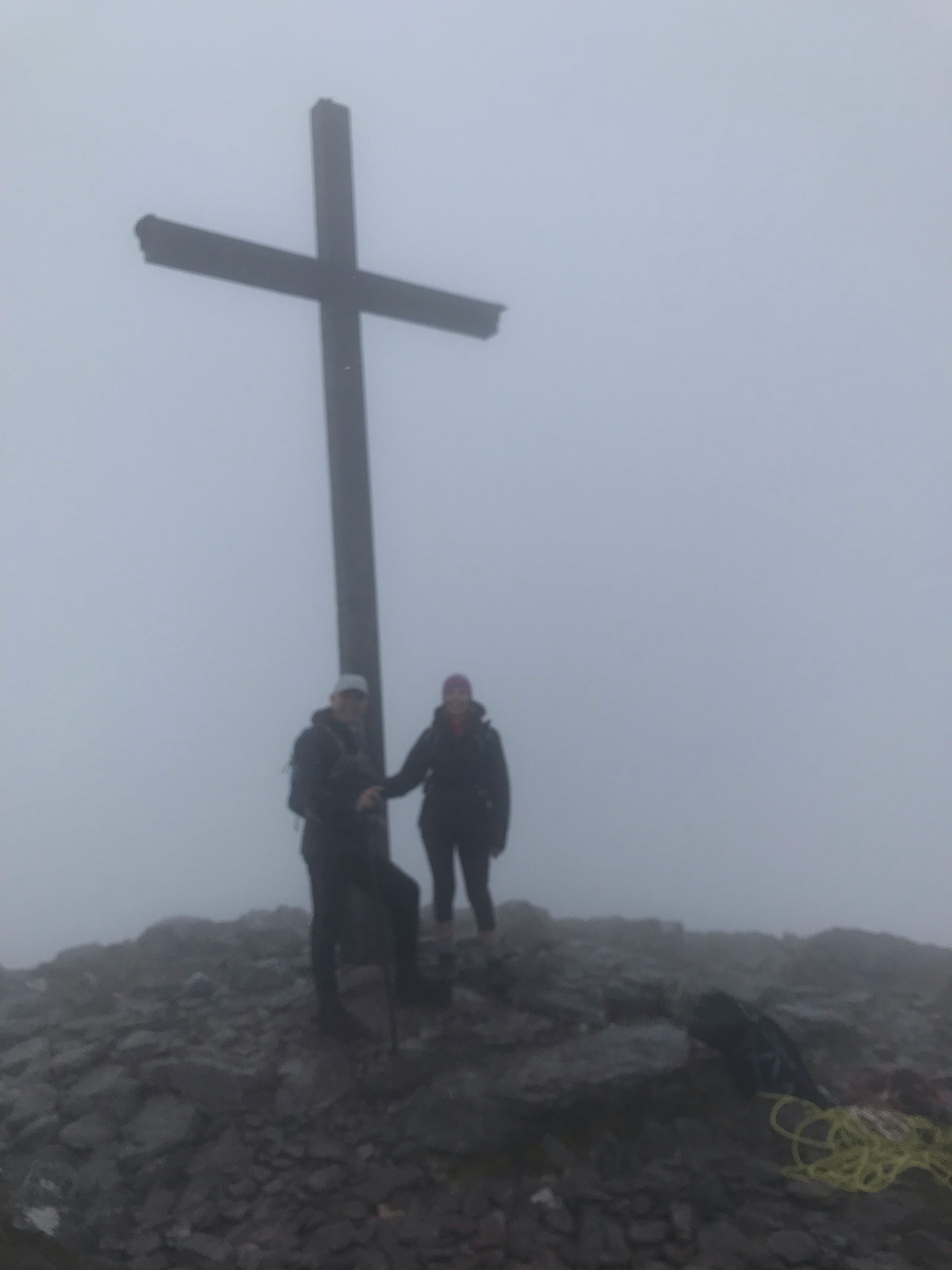
We drove home via Killarney without realising there was an international tatoo convention and motor bikers thing going on – so it took a little longer than expected as the traffic was a little thick. We had another great (Thanksgiving for Our Lives) meal at Tom Crean’s that night. The staff were great craic and the food was just terrific. The next day – our last – was spent pottering about Kenmare enjoying a great breakfast at Rookery Lane Cafe, visiting the sculpture show in the Butter Market and also the Kenmare Stone Circle at the top of Market Street. The Stone Circle, known as The Shrubberies, was built about two thousand years ago and is just awe inspiring – you can also leave a wish on the White Hawthorn Tree in the grounds which, as you know, will be picked up by the Little People.
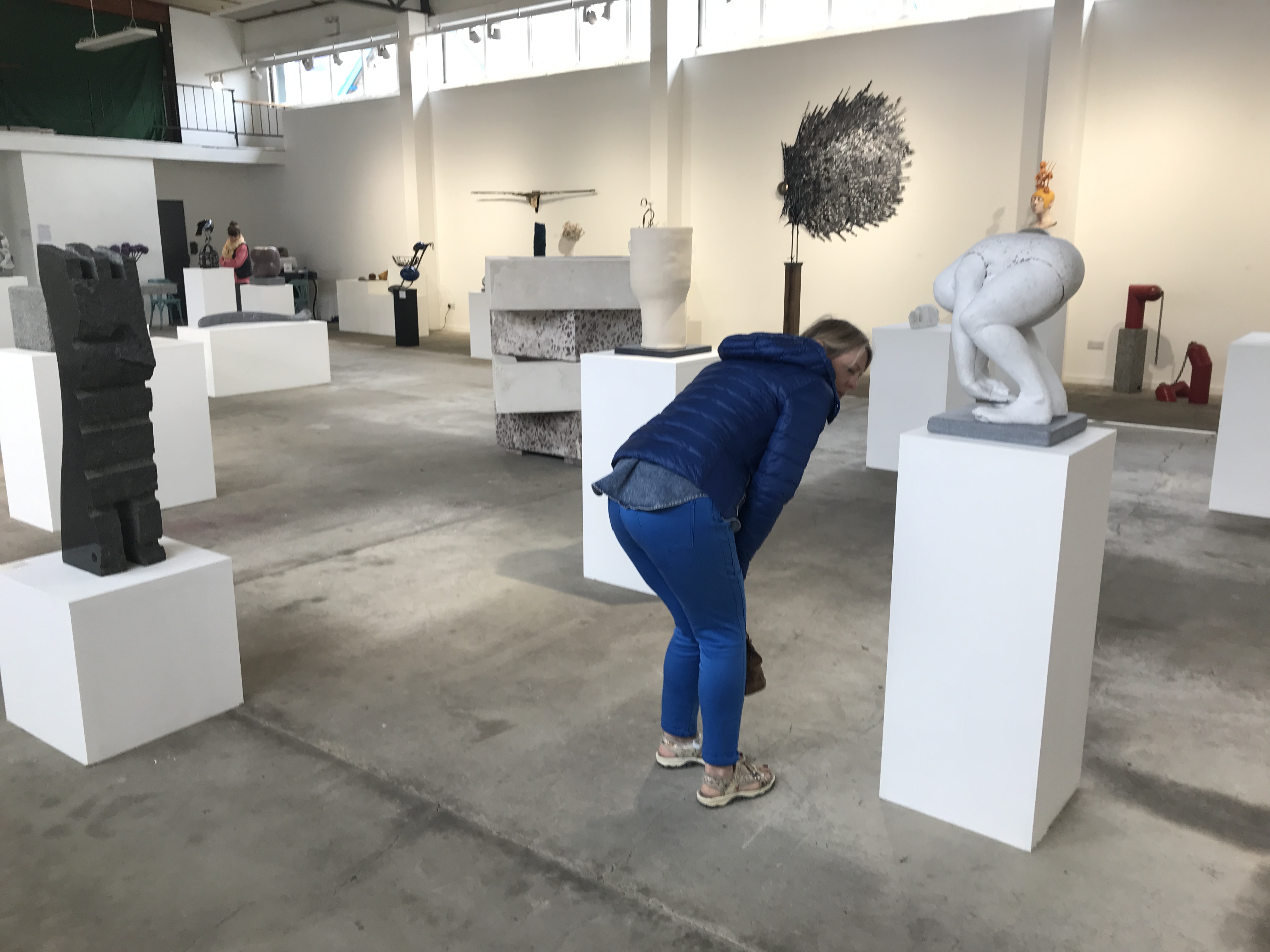

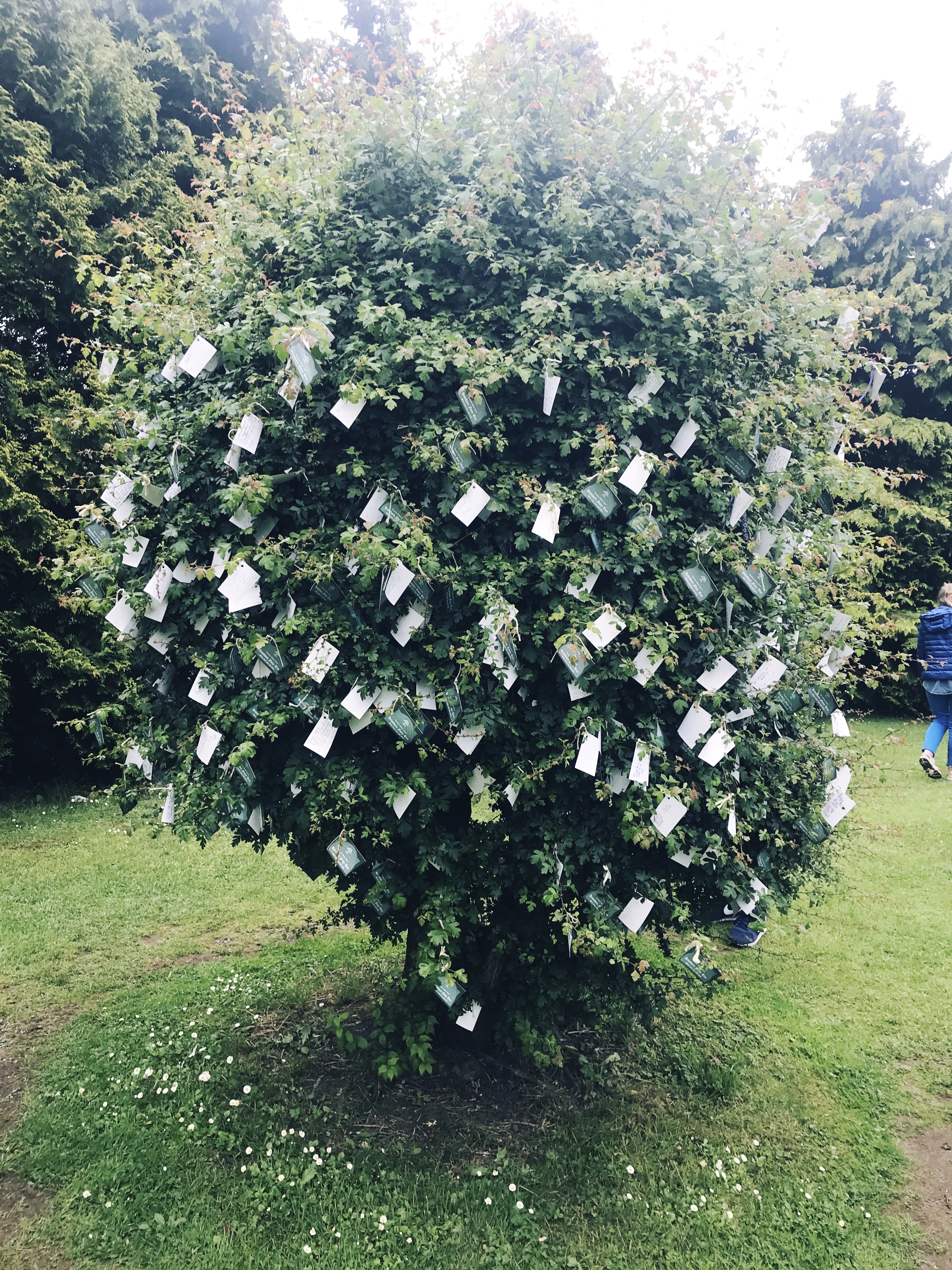
We left at lunchtime to drive back up to Dublin. Mary gave us the route (via Cork City) and this time we managed a comfortable 4½ hours without tractor assistance. At one point we did get lost and managed to pass “Top of Coom” – the highest bar in Ireland – without meaning too. Su also got very excited as she saw a road sign to “Bandon” – the home town, and summer retreat, of all-round entertainer Graham Norton – I refused to go (now if it had been Daniel O’Donnell in Donegal…).
We loved Kerry/Ciarraí – we will be back!
-
Kenmare, County Kerry: June 2022
Su and himself sailed from Holyhead, North Wales on the morning of Thursday 1 June 2022. We arrived in Dublin and scooted down to Kenmare in about 6 hours (!) getting stuck behind every tractor in the South West of Ireland. We were greeted, in Kenmare, by the indomitable Mary O’Brien and soon sorted out the accommodation at Hawthorn House plus food and drink. Kenmare is a small, pretty, town situated on the Ring of Kerry – a mecca which draws the tourists to see the scenic wonders of Sneem, Derryvane, Waterville, Valentia Island, Cahirsiveen and Killarney.
On the Friday we set out on the Ring (going anti-clockwise to avoid the tourist coaches) with the intention of visiting Su’s great aunt’s houses in Waterville and Cahirsiveen. I was also keen to visit Derrynane – the home of Daniel O’Connell with a beautiful strand to explore. We also visited the grave of Mary O’Connell which is located in the ruins of the old Abbey.
In Waterville we located the house of Su’s Aunt, Sarah Quigley, born in Enniskerry, County Wicklow had trained as a teacher and taught in the local national school. Her husband, Arthur Cullum, worked for the Meteorological Office and the cable station. The cable, from Waterville, stretched some 2,400 miles across the Atlantic and linked Canada with the UK and France. The school is linked to St Michael’s Church of Ireland (which you can see in background below).
,
We then had a short diversion to visit Portmagee, Valentia Island and the Kerry cliffs – with great views of Skellig Michael/Sceilig Mhichíl – an old monastic settlement founded between 600-800AD.
We arrived in Cahirsiveen late afternoon and soon found the other Cullum home – Westwood House, situated just outside the town. Arthur Cullum’s father – John Edward – came to Ireland from Surrey, England in the 1870s and was the chief scientist for the Valentia Meteorological Office. Su’s Great Aunt Sarah lived in Westwood House when she first came to Kerry from Wicklow.
We got back to Kenmare for a delicious meal at Mulcahy’s restaurant. Su said – as we are in Kerry – let’s go for a walk. I talked to the bar staff and – after a couple of pints of plain – was convinced by them to climb Carrauntoohil – the highest mountain in Ireland. They forgot to mention someone died on it this week and two climbers were helicoptered off yesterday. “Sure – you’ll be grand” – they said.
So we’re back – after 3,500 feet of ascent, hanging off rocks in the Devil’s Ladder, 8 pints of water and 6 hours of walking through driving wind and rain. And we’ve been ill for the past month, not particularly fit after the Covid shenanigans- and have a dodgy assortment of knees, feet and hips. If you ever visit Kerry don’t trust the bar staff…
We drove home via Killarney without realising there was an international tatoo convention and motor bikers thing going on – so it took a little longer than expected as the traffic was a little thick. We had another great (Thanksgiving for Our Lives) meal at Tom Crean’s that night. The staff were great craic and the food was just terrific. The next day – our last – was spent pottering about Kenmare enjoying a great breakfast at Rookery Lane Cafe, visiting the sculpture show in the Butter Market and also the Kenmare Stone Circle at the top of Market Street. The Stone Circle, known as The Shrubberies, was built about two thousand years ago and is just awe inspiring – you can also leave a wish on the White Hawthorn Tree in the grounds which, as you know, will be picked up by the Little People.
We left at lunchtime to drive back up to Dublin. Mary gave us the route (via Cork City) and this time we managed a comfortable 4½ hours without tractor assistance. At one point we did get lost and managed to pass “Top of Coom” – the highest bar in Ireland – without meaning too. Su also got very excited as she saw a road sign to “Bandon” – the home town, and summer retreat, of all-round entertainer Graham Norton – I refused to go (now if it had been Daniel O’Donnell in Donegal…).
We loved Kerry/Ciarraí – we will be back!
-
Green Peacock
The serene and starry sky and the shining sun are peacocks. The calm, azure heavens, bespangled with a thousand stars, a thousand brilliant eyes, and the sun rich with the colours of the rainbow, offer the appearance of a peacock in all the splendour of its eye-besprinkled feathers.
When the sky or the thousand-rayed sun (sahasrânçus) is hidden in the clouds, or veiled by the autumnal waters, it again resembles the peacock, which, in the dark part of the year, like a great number of vividly-coloured birds, sheds its beautiful plumage, and becomes dark and unadorned; the crow which had put the peacock’s feathers on then returns to caw amongst the funereal crows.
In winter the peacock-crow has nothing remaining to it except its disagreeable and shrill cry, not dissimilar to that of the crows. It is commonly said of the peacock that it has an angel’s feathers, a devil’s voice, and a thief’s walk. The crow-peacock is proverbial.
-
Egyptian Locust
According to Onesicritus, in those parts of India where there is no shadow, the men attain the height of five cubits and two palms, and their life is prolonged to one hundred and thirty years; they die without any symptoms of old age, and just as if they were in the middle period of life. Pergannes calls the Indians, whose age exceeds one hundred years, by the name of Gymnetæ; but not a few authors style them Macrobii.
Ctesias mentions a tribe of them, known by the name of Pandore, whose locality is in the valleys, and who live to their two-hundredth year; their hair is white in youth, and becomes black in old age. On the other hand, there are some people joining up to the country of the Macrobii, who never live beyond their fortieth year, and their females have children once only during their lives.
This circumstance is also mentioned by Agatharchides, who states, in addition, that they live on locusts, and are very swift of foot. Clitarchus and Megasthenes give these people the name of Mandi, and enumerate as many as three hundred villages which belong to them. Their women are capable of bearing children in the seventh year of their age, and become old at forty.
Artemidorus states that in the island of Taprobane (Ceylon) life is prolonged to an extreme length, while at the same time, the body is exempt from weakness. Among the Calingæ, a nation also of India, the women conceive at five years of age, and do not live beyond their eighth year. In other places again, there are men born with long hairy tails, and of remarkable swiftness of foot; while there are others that have ears so large as to cover the whole body. -
Rottlerian Mackerel
“He had all the body of a fish, but below the head of the fish another head, which was that of a man; also the feet of a man, which came out of its fish’s tail. He had a human voice, and its image is preserved to this day.”
-
Subscribe
Subscribed
Already have a WordPress.com account? Log in now.
 GMacFamilyBlog